Review: Archduke at Royal Court Theatre
⭐⭐⭐ (Three Stars)
Any GCSE History textbook will tell you that on 28th June 1914, Archduke Franz Ferdinand was assassinated by Gavrilo Princip in Sarajevo, setting off a series of events that led to the outbreak of the First World War. Princip, 19 years old at the time, murdered the Archduke (heir to the throne of Austria-Hungary) and his wife in the hope of freeing Bosnia and Herzegovina from Austro-Hungarian rule. Archduke at the Royal Court, written by Rajiv Joseph and directed by Lindsey Turner, aims to explore this story of how a young man from a poor background with little hope for his future could end up changing the course of world history. It’s an intriguing premise, rich with opportunity for reflecting on how similar radicalisation is rife amongst young men in the 21st Century. However, the play never quite reaches its full potential, instead leaning into absurdity. Comedic moments are sporadic and rarely laugh-out-loud funny and, while each act is only 50 minutes long, at times scenes lose the audience’s engagement with so many bizarre turns of events in quick succession.
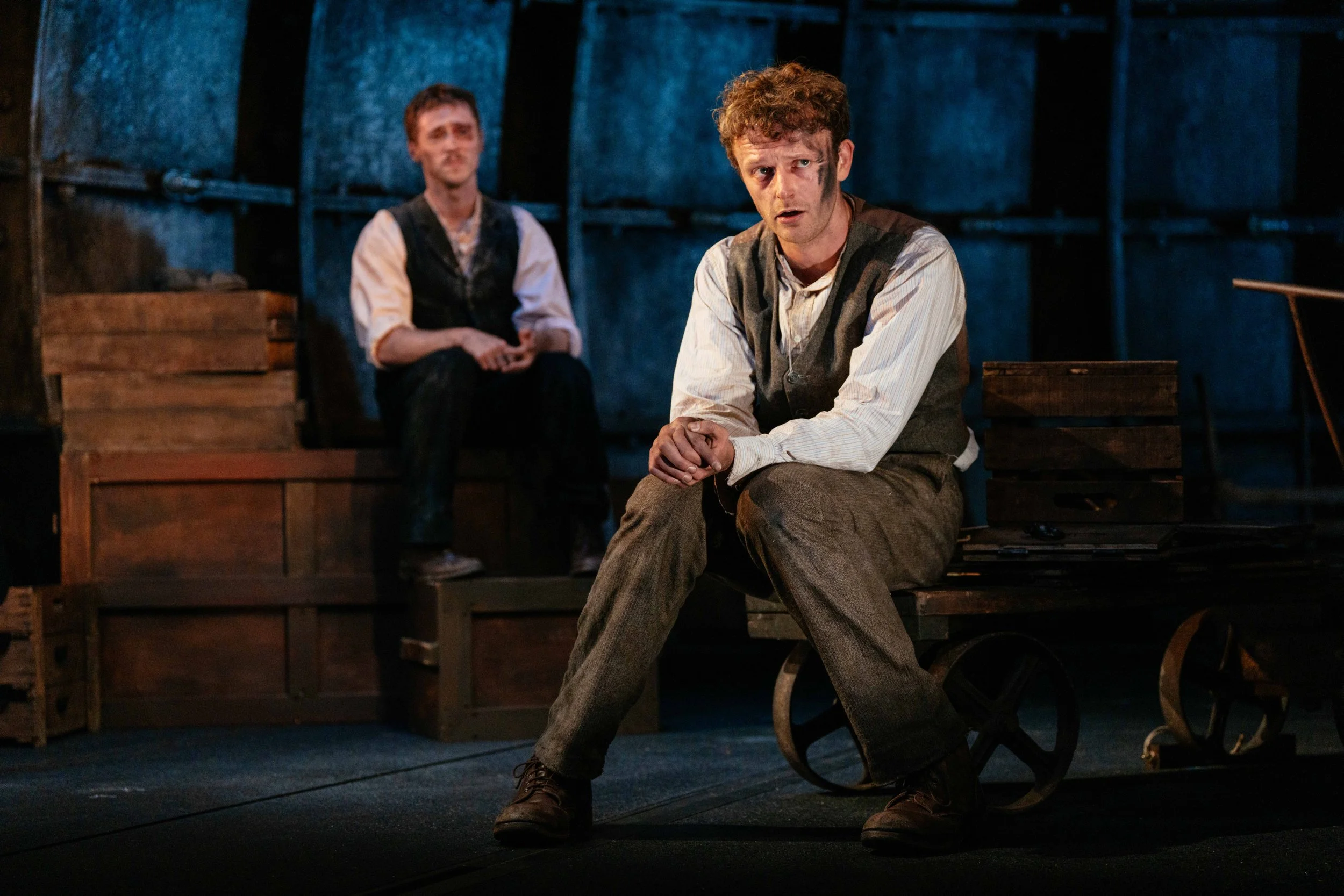
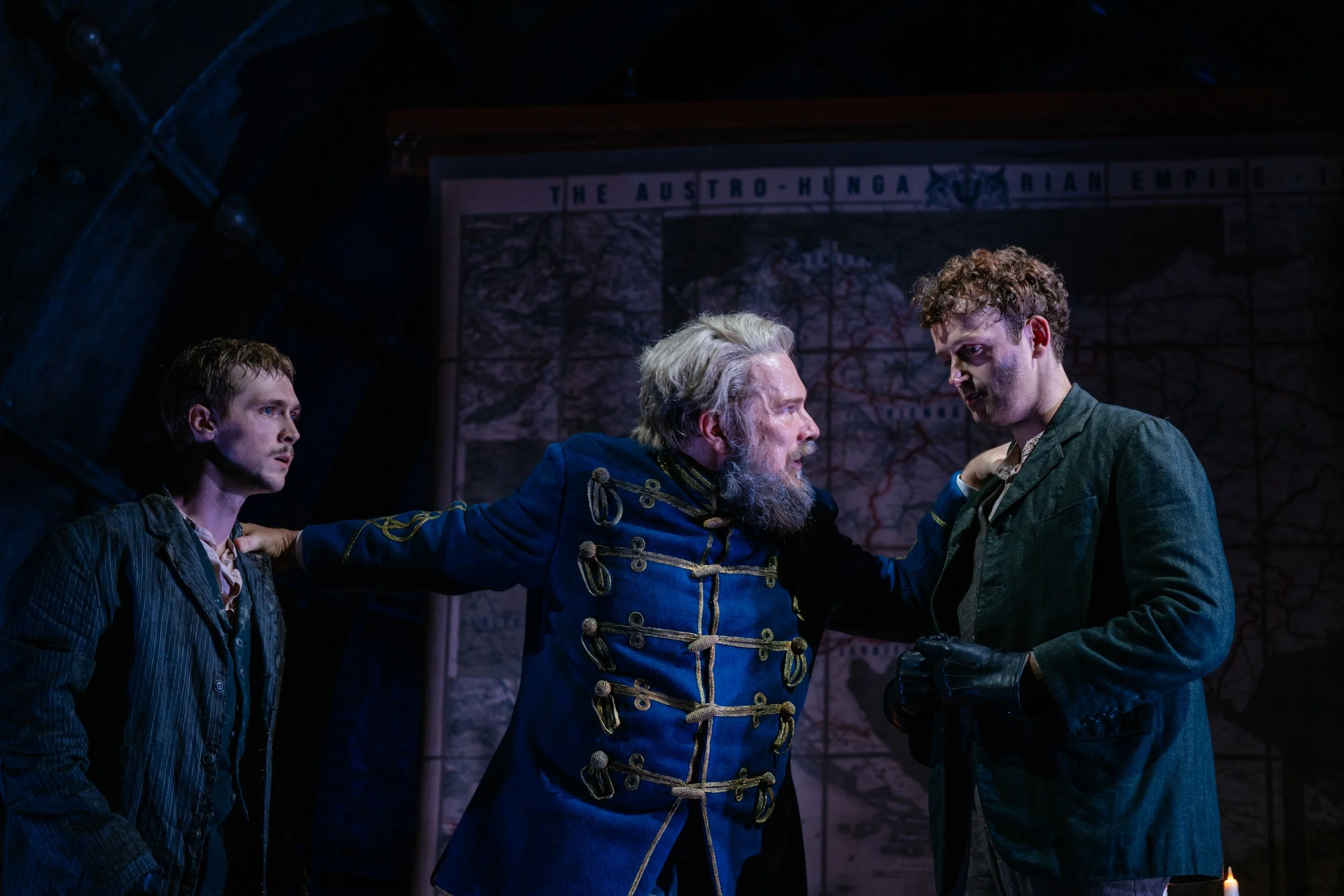
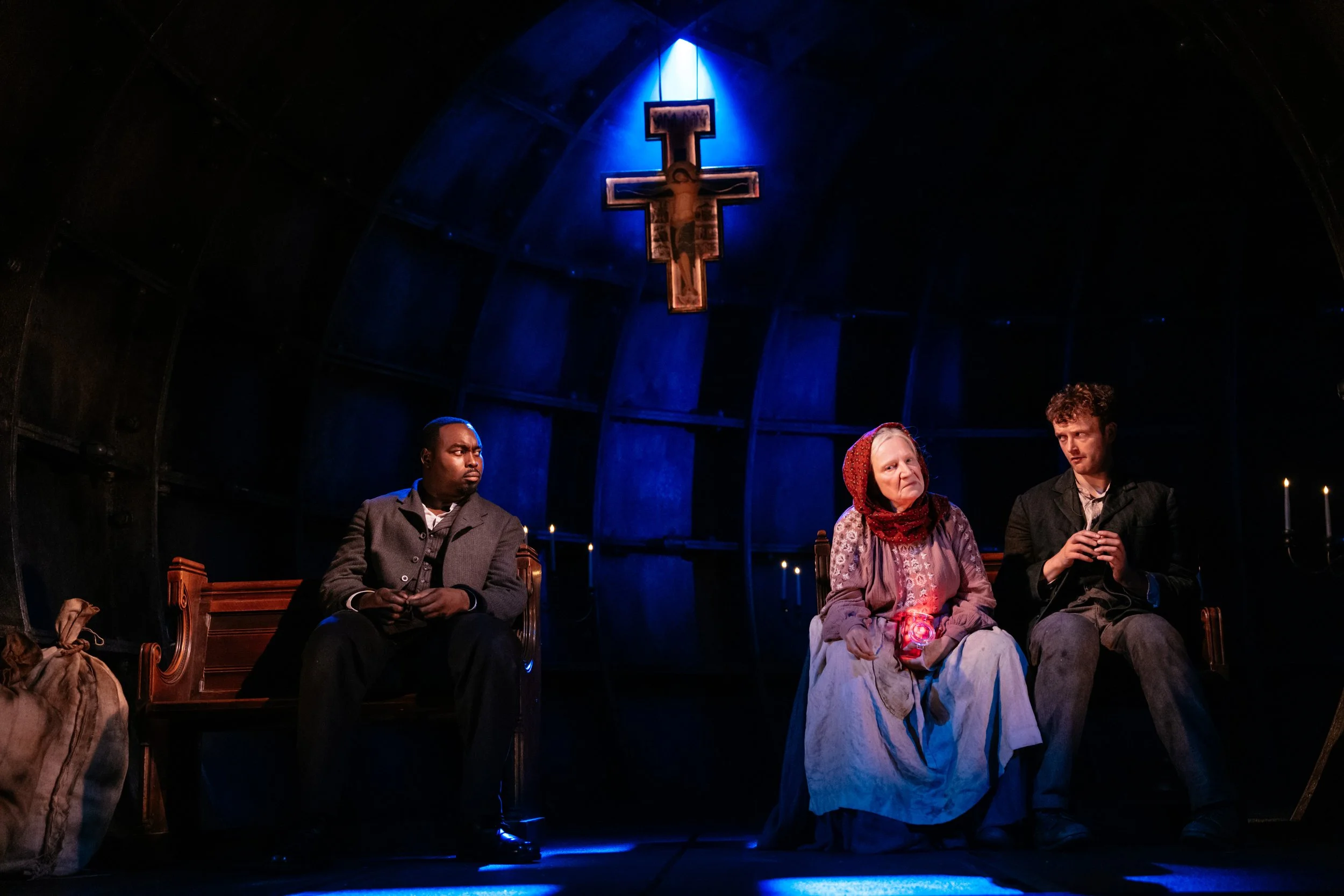
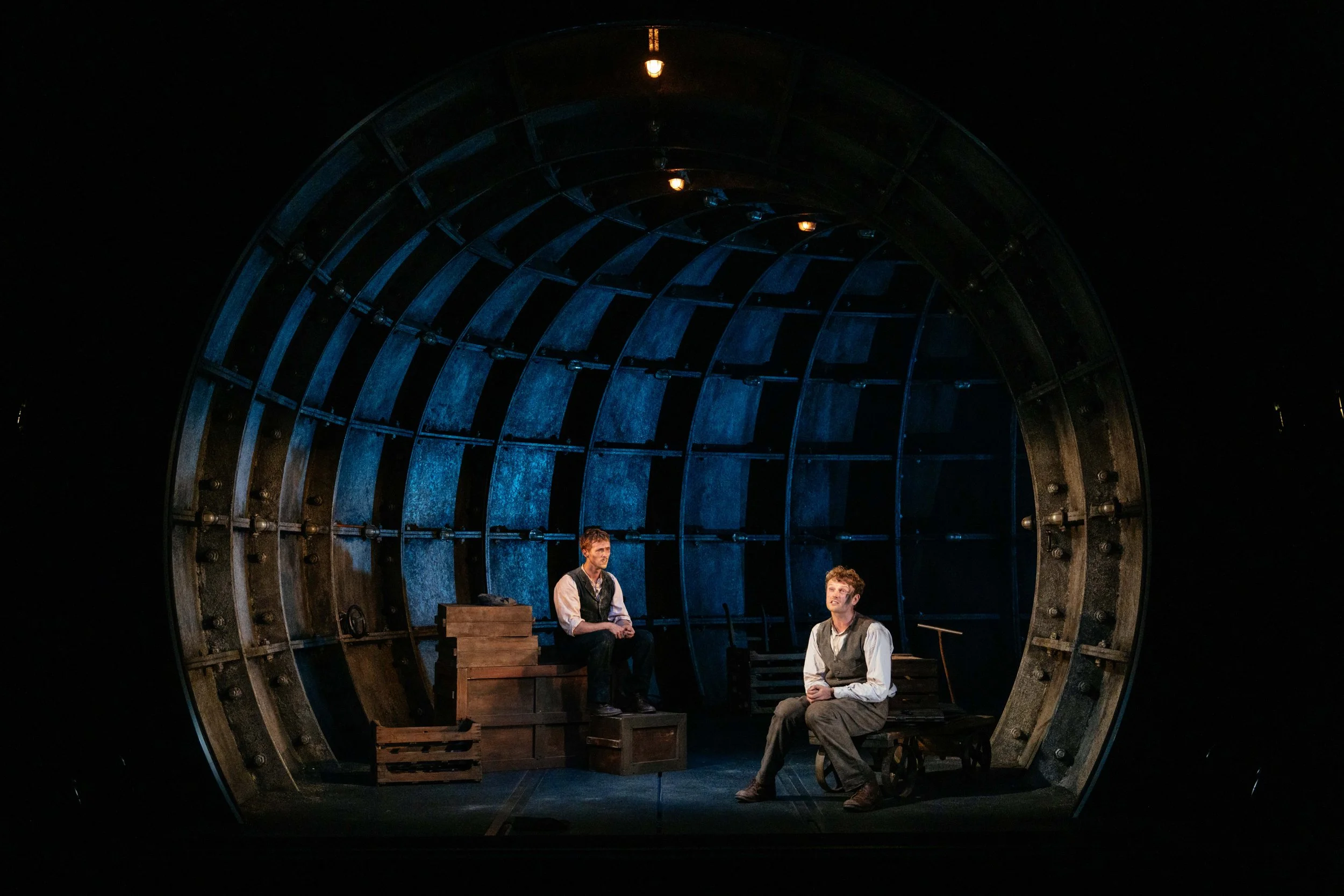
We first meet Gavrilo Princip (Stanley Morgan) as he arrives at an abandoned warehouse - an impressive tunnel-like set designed by Es Devlin - where he is met by Nedeljko (Chris Walley). The two young men, both recently diagnosed with terminal tuberculosis, reveal that they have both been sent there by their doctor with the promise of finding meaning in their lives. Morgan and Walley immediately establish strong chemistry. Most of the humour in the play is found in their interactions, which is also where Joseph’s writing is strongest, with lines such as Nedeljko comparing being with a woman to “taking a bath with a bunch of rabbits” being the most memorable of the play. Eventually, they are joined by Trifko (Abraham Popoola), who convinces them to join “Captain” Dragutin Apis Dimitrijevic (Marc Wootton) with the promise of food made by his cook, Sladjana (Janice Connolly). It is at this point that the play should become most compelling, as the young men are radicalised into agreeing to murder the Archduke and then poison themselves with cyanide. Instead, however, this part of the play feels under-developed, with the three young men seemingly motivated by the promise of food and the prospect of meeting women in Sarajevo rather than by any genuine belief in the political cause.
One area where the play really impresses is in its design. Devlin’s tunnel-like set, framed by a line of bright white light and illuminated atmospherically by Neil Austin’s lighting design, is striking against the darkness of the auditorium. Different locations are created through the introduction of props and furniture, although these transitions could be improved by making the hard-working stage crew moving the set less visible to the audience. Seeing crew members dressed in black with headsets on in the midst of the play undermines the audience’s immersion in the story and time period. The highlight of the production’s design comes in the second act, when the three men find themselves aboard a luxurious train carriage - cleverly appearing on stage through a mist of smoke - on the way to Sarajevo. This striking moment even prompted an audible “Wow!” from one audience member.
Archduke has an interesting subject matter and occasional moments of comedy. However, what could feel timely and relevant to today’s political climate fails to do so and, while the bizarre and absurd tone can be entertaining at times, the overall result feels somewhat shallow.
Archduke runs at Royal Court Theatre until 25th July 2026.
Photos by Helen Murray