Review: Arcadia at Duke of York’s / Tom Stoppard Theatre
⭐⭐⭐⭐⭐ (Five Stars)
It was announced this week that London’s Duke of York’s Theatre is to be renamed in honour of the late playwright Tom Stoppard. This news has been perfectly timed to coincide with the theatre hosting the West End transfer of Carrie Cracknell’s excellent Arcadia revival, previously staged at Old Vic Theatre earlier this year. This revival - featuring thoughtful staging and design and impressive performances - highlights the quality of the intelligent, cleverly-crafted play written by Stoppard in 1993.
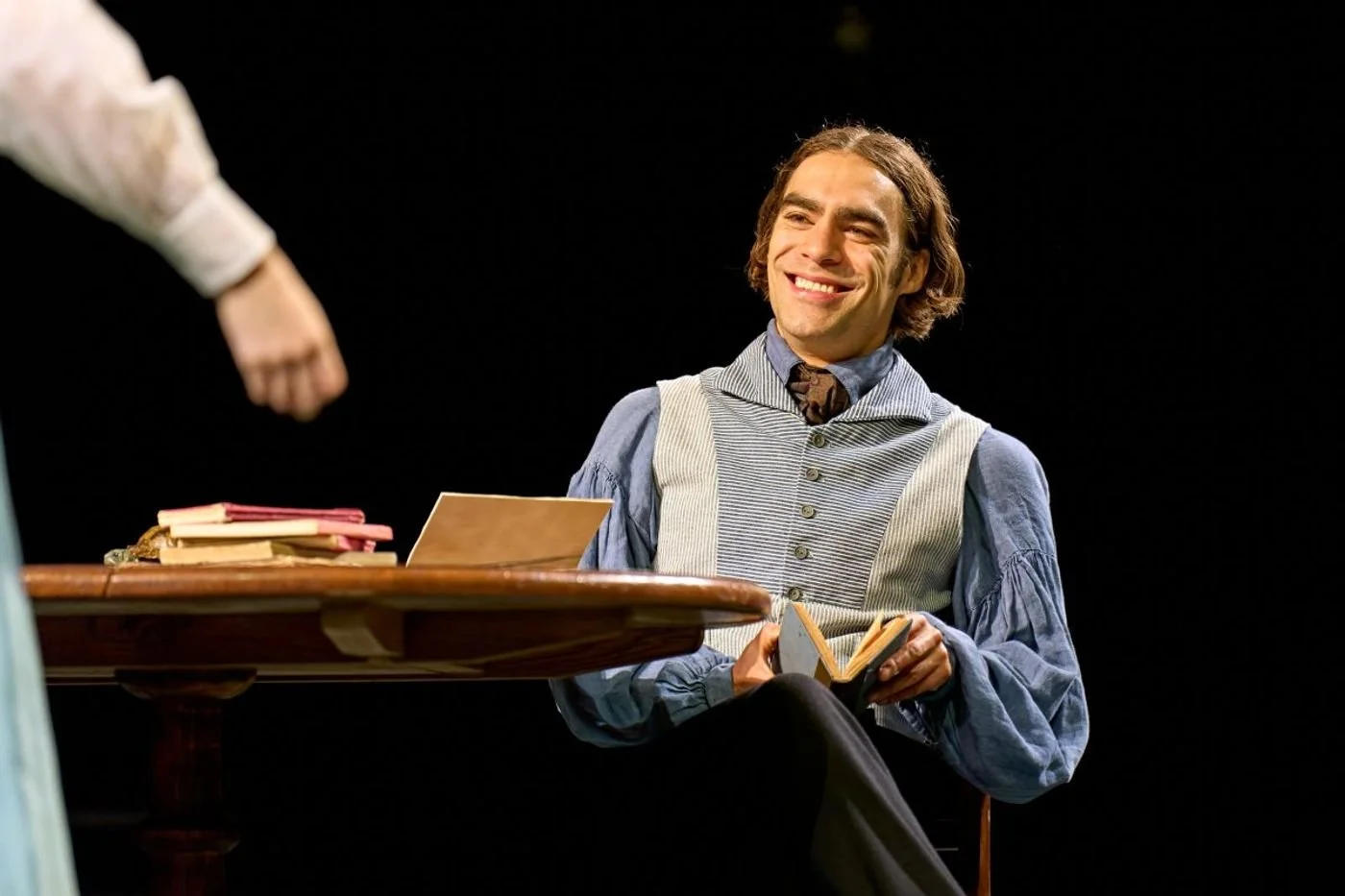
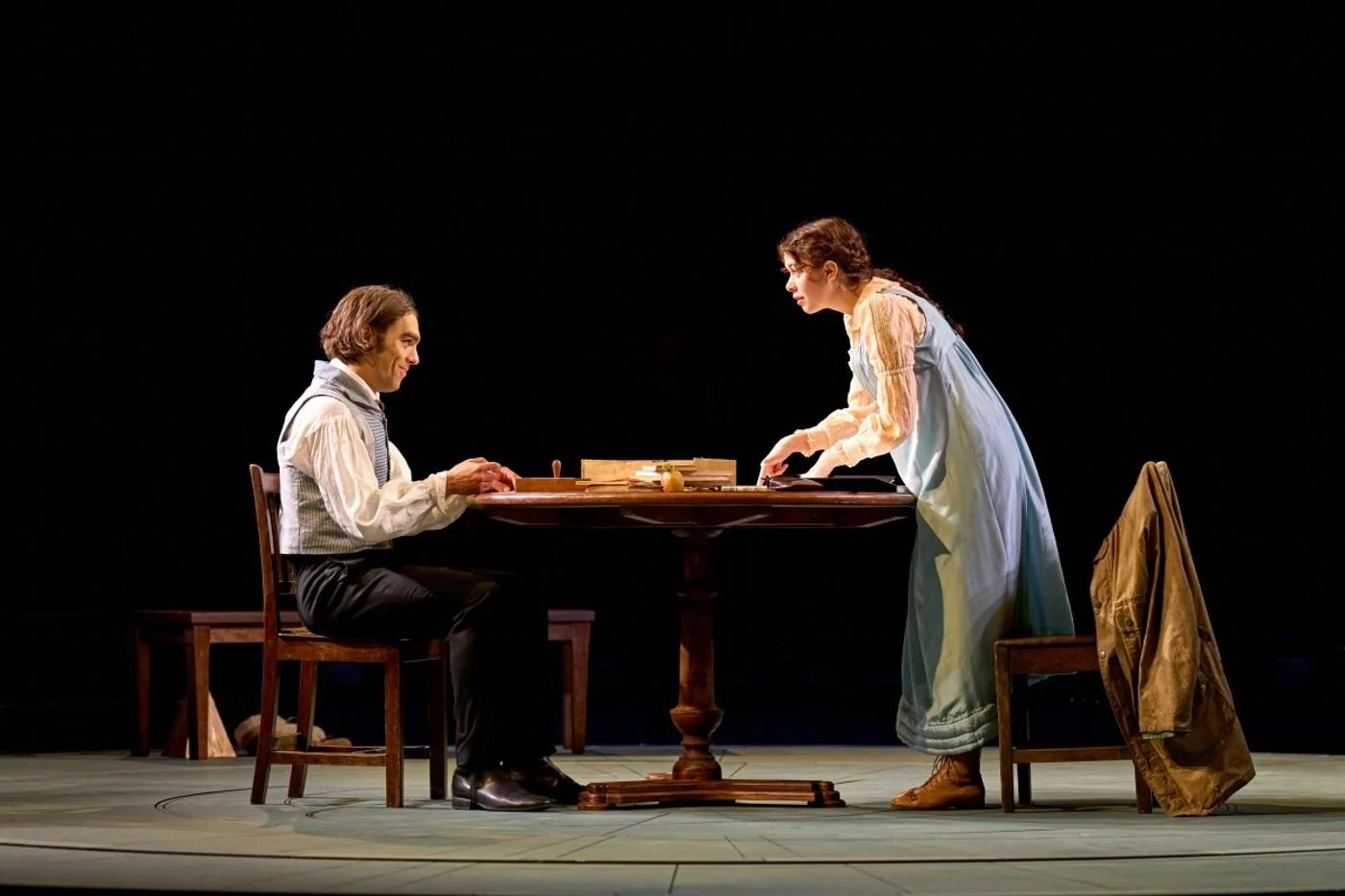
The events depicted in Arcadia take place in the same location - a country house in Derbyshire named Sidley Park - but in two distinct eras. In the early 1800s, we meet precocious teenager Thomasina Coverly (Isis Hainsworth) studying with her tutor Septimus Hodge (Seamus Dillane) amidst scandals taking place at Sidley Park. In the 1990s (the modern day when Stoppard was writing), a new generation of Coverlys live in the house. They include Valentine Coverly (Angus Cooper), a postgraduate mathematician who uses modern technological advancements to prove that Thomasina was a mathematical prodigy well ahead of her time. Also converging on the house are two academic researchers - Hannah Jarvis (Nikki Amuka-Bird) and Bernard Nightingale (Oliver Chris) - both attempting to piece together a true account of events at Sidley Park in the 1800s, which we as the audience see for ourselves, from the documents and articles left behind. In the play, this is compared to trying to “spot the tune” of an untuned piano being played in the next room by a drunk and tone-deaf player.
Stoppard’s script contains many interesting and nuanced observations on mathematics and science ranging from Newton’s Laws to Chaos Theory to Fractals. The pursuit of knowledge and understanding is something we recognise in both time periods depicted in Arcadia, best summarised by Hannah who tells Valentine, “It’s wanting to know that makes us matter. Otherwise we’re going out the way we came in.” The writing captures the different sensibilities and turns of phrase between the two time periods, but also highlights their similarities both in words spoken, such as Hannah Coverly in the 1990s and Thomasina Coverly in the 1800s both asking if they are the first person to question agreed theories of the universe, as well as in characters’ actions and motivations.
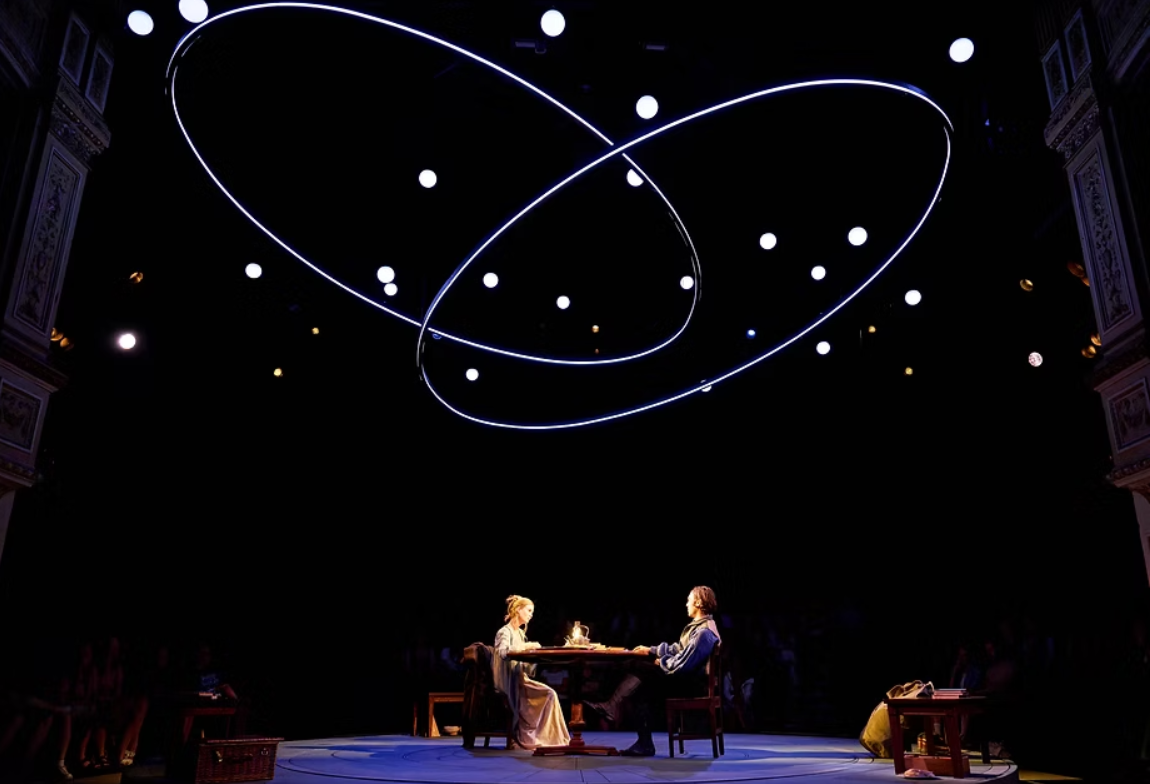
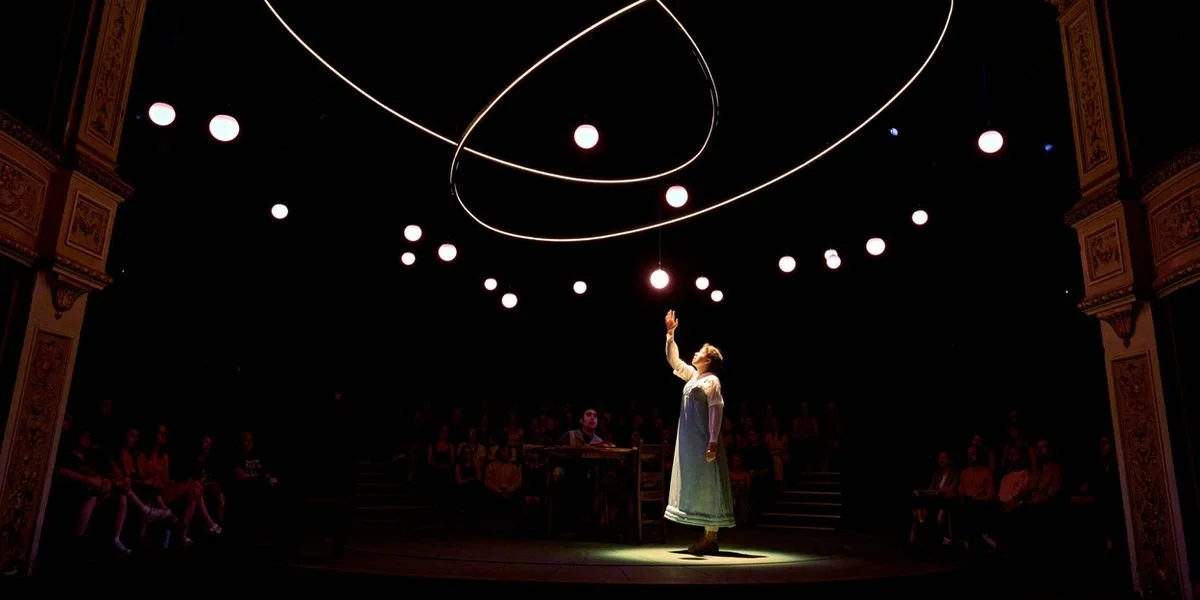
This revival sees the play performed in the round, with a portion of the audience seated on the stage. Ales Eales’ set consists of a circular stage with a central table and chairs beneath suspended spheres of light, an abstract nod to the events in each timeline taking place under the same sky. We oscillate between scenes set in the early 1800s and scenes set in the 1990s throughout the play. At each point where we switch between the time periods, the lights move as the stage itself revolves in a very effective way of marking the passage of time while, later in the play, scenes set in both time periods happen on stage simultaneously, accompanied by a continuous slow revolve of the stage.
Overall, Arcadia at Duke of York’s (soon to be Tom Stoppard) Theatre is an outstanding piece of theatre. Each of the cast members so thoroughly understands the material, many of them managing to convey complex mathematical and scientific ideas to an audience who may not be accustomed to seeing such themes on stage. Cracknell’s staging choices heighten and complement Stoppard’s writing, resulting in an impressive and thought-provoking production.
Arcadia runs at Duke of York’s Theatre until 12th September 2026.
Photos by Manuel Harlan