⭐⭐⭐⭐ (Four Stars)
Based on Nobel Prize–winning writer Isaac Bashevis Singer’s original short story (made famous by a 1983 film adaptation that saw Barbra Streisand portray the titular character), director Gary Abrahams’ Yentl, first staged in Australia and now making its European premiere at Marylebone Theatre, takes a bilingual approach to adapting the story for the stage, incorporating both English and Yiddish into its storytelling. The result is a richly theatrical production that embraces both the culture and traditions of Judaism while also bringing to the fore the queer themes of the story, elements that previous adaptations have often treated more as subtext. For audiences unfamiliar with Yiddish theatre, the heightened style and often exaggerated characterisation (particularly from a devilish narrator character known as The Figure) may take some adjustment. However, as the play unfolds it becomes increasingly difficult not to find yourself fully engaged and emotionally invested in Yentl’s story, told in a beautifully realised and fantastically performed production.
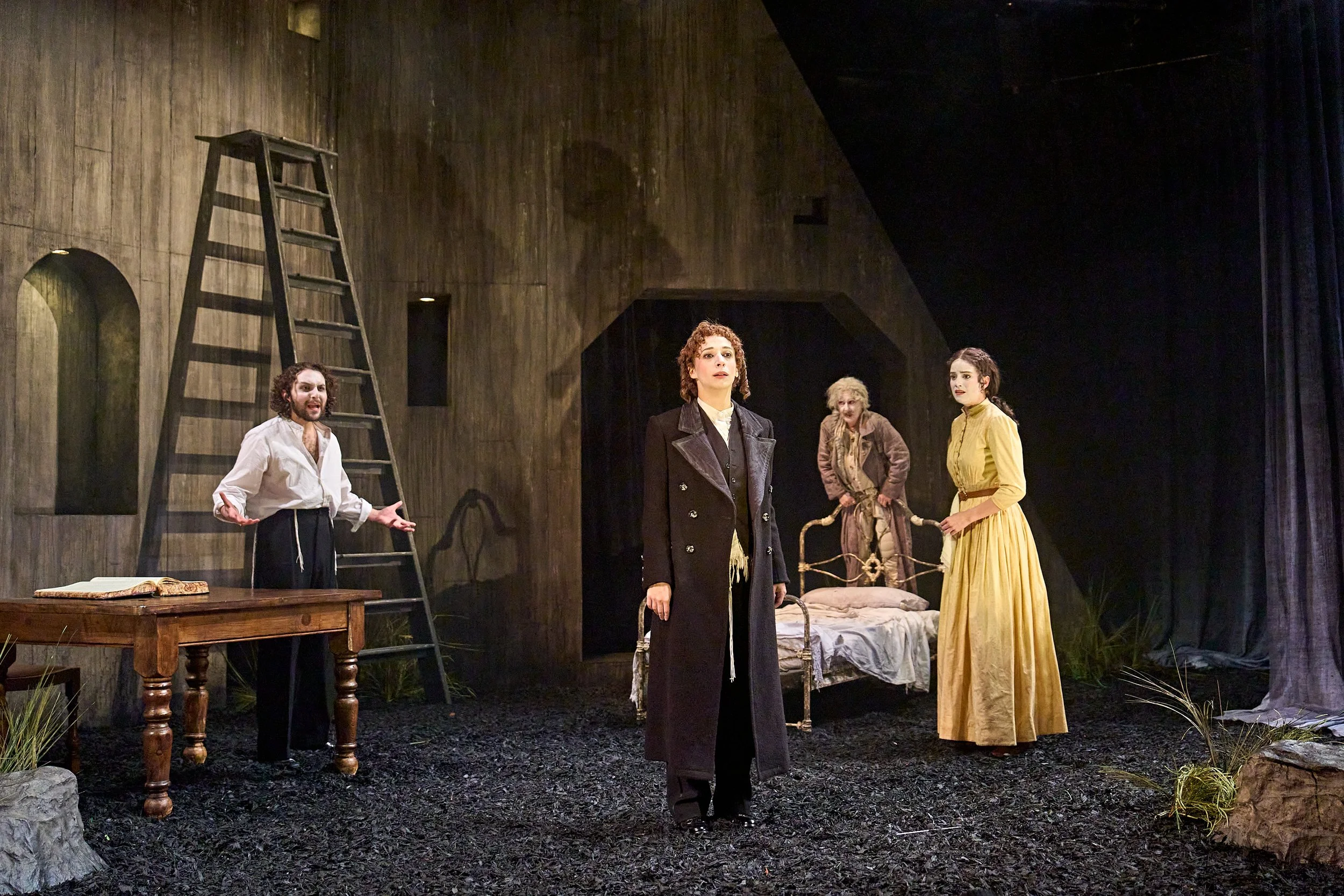
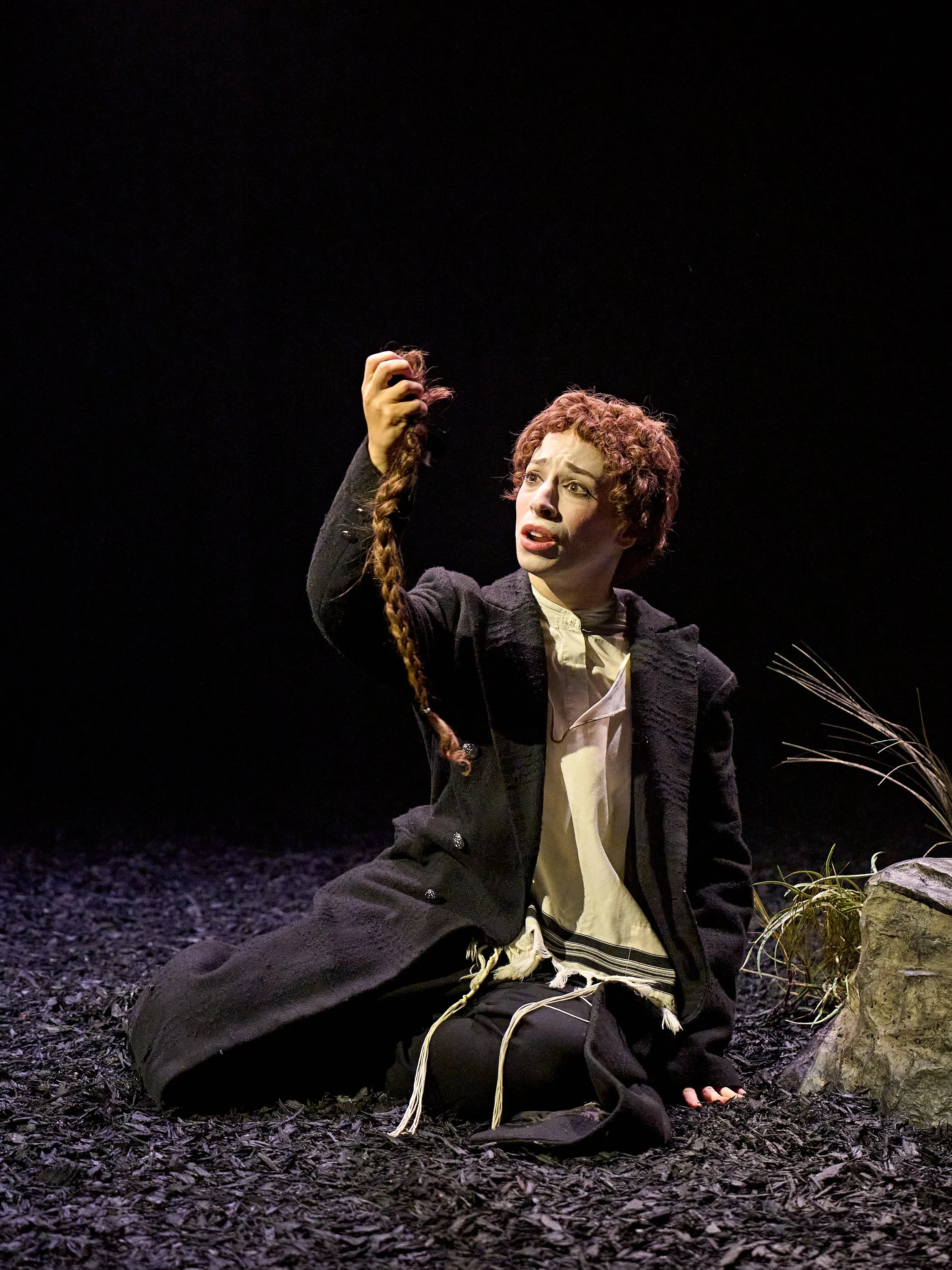
The play introduces us to Yentl (Amy Hack), a young Jewish woman who passionately yearns to study religious scripture and become a scholar, an opportunity reserved only for boys at the time. Following the death of Yentl’s father (Evelyn Krape, multi-roling as The Figure), and unwilling to accept a future defined by marriage and raising children, Yentl assumes the new identity of Anshel and enrolls in a Jewish religious school for boys. As Anshel, they develop relationships with Avigdor (Ashley Margolis), a young man eager to find a wife, and his former fiance Hodes (Genevieve Kingsford), affording Anshel an education not only academic but also in the complexities of their own sexuality and gender identity.
Co-writers Gary Abrahams, Elise Esther Hearst, and Galit Klas’ script balances moments of humour (delivered with expert timing by the cast) with a genuine sensitivity towards its central themes. Crucially, the comedy never comes at the expense of the protagonist or their identity. Here, transness is treated as an integral aspect of Yentl’s journey, just as Jewishness itself is, and the play thoughtfully explores how these elements intersect. Dialogue shifts fluidly between English and Yiddish, yet audiences are never left behind thanks to English surtitles projected onto the set. The set itself, beautifully designed by Isabella Van Braeckel, features a large structure occupying much of the rear of the stage, with windows and compartments softly illuminated as if by candlelight (with lighting designed by Tom Turner) and a semi-sheer curtain that is utilised as a backdrop at other points. The use of Yiddish - particularly at moments of emotional intensity - enhances the feeling of cultural authenticity and reinforces Yentl’s connection to tradition (with letters in the alphabet being gendered), even as they grapple with the desire for a more modern way of living.
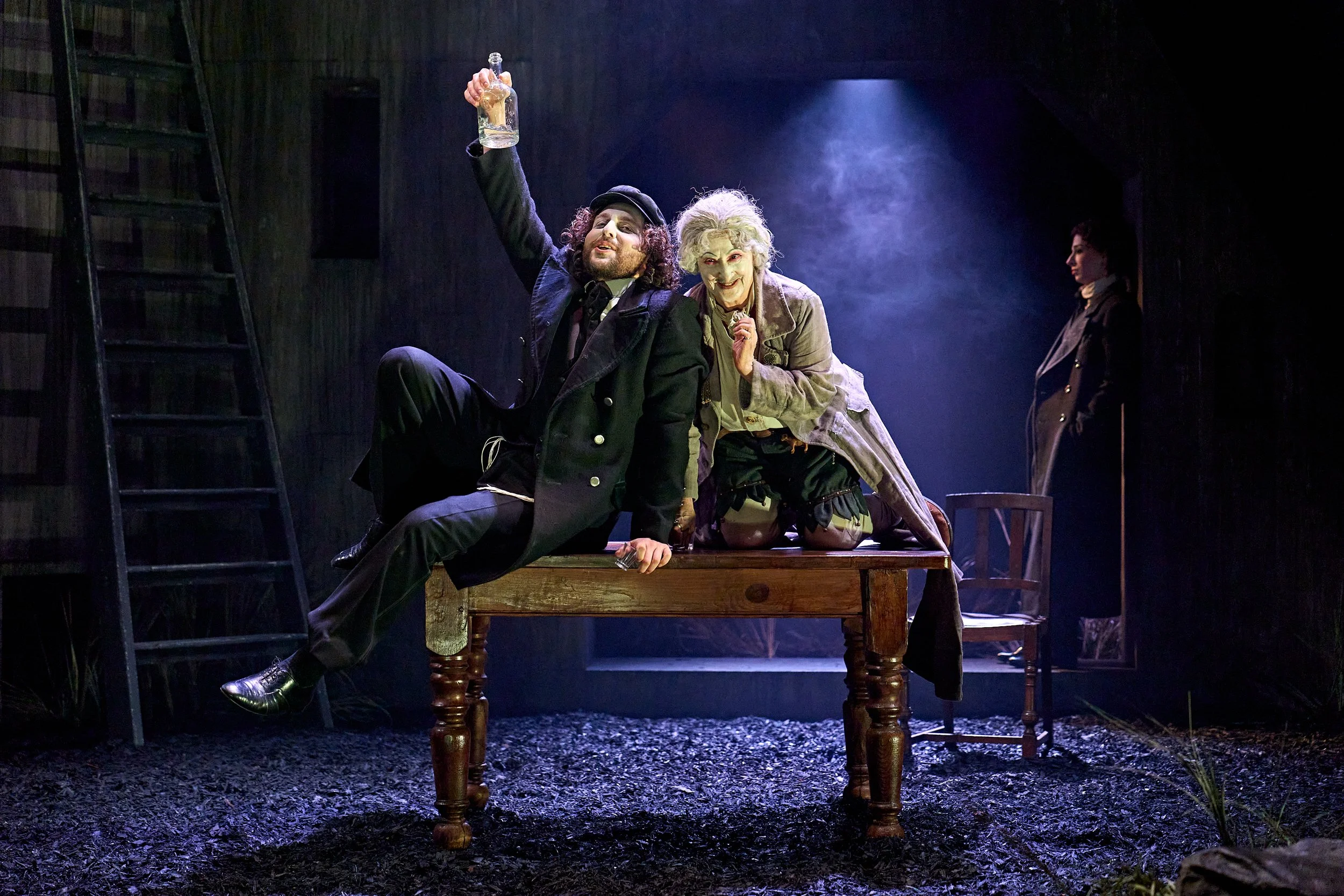
Gary Abrahams’ direction maintains a strong sense of pace throughout. The staging choices are particularly effective in scenes which see Anshel conversing simultaneously with both Avigdor and Hodes, with the three characters sharing the playing space while their dialogue overlaps in carefully choreographed exchanges. Amy Hack delivers a compelling performance as Anshel, depicting the character gradually becoming more at ease in the new identity they have created through physicality and nuanced line delivery. Evelyn Krape’s mischievous presence as The Figure provides both commentary, context, and humour, while Ashley Margolis and Genevieve Kingsford bring welcome depth to Avigdor and Hodes respectively.
Overall, Yentl is a thoughtful and engaging production that offers London audiences the opportunity to experience a theatrical style rarely seen on the city’s stages. I’ll admit that it took a while for me to adjust to the style of storytelling in Yentl, but by the second act the production had well and truly won me over.
Yentl runs at Marylebone Theatre until 12th April 2026.

Photos by Manuel Harlan