⭐⭐⭐⭐ (Four Stars)
Redcliffe at Southwark Playhouse Borough, the first fully staged production of this exciting new British musical, has the makings of something truly special. Jordan Luke Gage - who has contributed the book, music, and lyrics for the show alongside playing the leading role - uses the musical to tell the true story of William Critchard and Richard Arnold’s forbidden love in early 18th-century Redcliffe, a port town in Bristol. While the production may not yet have reached its final, most polished form, it’s undeniably a beautiful piece of theatre committed not only to telling the story of these two men, but also to highlighting the fact that homosexuality remains punishable by death in at least 12 countries and criminalised in 65 others, even in 2026: although this is a story set in the 1700s it’s still the reality for many people around the world. Blending research into Critchard and Arnold’s real stories from the Bristol Archives and Bristol Museum with moments of levity and humour, Redcliffe tells an important story in an engaging and heart-breaking way.
Taking place between 1752 and 1753, the musical primarily centres around William Critchard (Jordan Luke Gage), a young man born and raised in Redcliffe, and his family, whose lives are turned upside down when Richard Arnold (Daniel Krikler), a lieutenant in the navy, arrives in the small Bristol town. Although some of the Bristolian accents occasionally slip throughout the production, the strength of the acting more than compensates for this. Gage is utterly compelling as William, with a stand-out moment being his performance of the musical number Void of Love, in which he faces the tragic prospect of never being able to experience romantic love because of his sexuality. Director Paul Foster’s choice to have the ensemble join Gage on stage for part of this song, singing backing vocals with hymn books in hand as if they are in a church choir, is a powerful one, highlighting the role of religion in society’s intolerance.
As William’s love interest Richard, Daniel Krikler is charming and has great chemistry with Gage, especially in the song A Million Things I Know where the characters flirt and show off about how much they know about the world. However, Richard has much less stage time, especially in the second act, so the character and his relationship with William don’t feel quite as developed as they could. The performance in Redcliffe that audiences are sure to be left stunned by is delivered by Rebecca Lock as William’s mother. Lock takes the character on a significant emotional journey and provides many of Redcliffe’s funniest and most devastating moments. In the first act, she is laugh-out-loud funny in her overenthusiasm for her son to settle down and marry. However, in the second act, her solo number, Hurricane, in which she comes to terms with the accusations made against her son, is delivered so excellently and is so emotionally affecting that it feels as though the entire audience reaches for their tissues in unison once it is over.
The songs Gage has written for the musical are atmospheric and characterful throughout. There’s also a sense of playfulness in the writing, including several metatheatrical nods, such as when Richard begins singing and William shuts him down with the line, “We don’t need a reprise,” or when William walks in on his mother and sister Abigail (Jess Douglas Welsh) singing excitedly about his imaginary wedding, only for them to freeze awkwardly in embarrassment until he leaves again, at which point they continue their song.
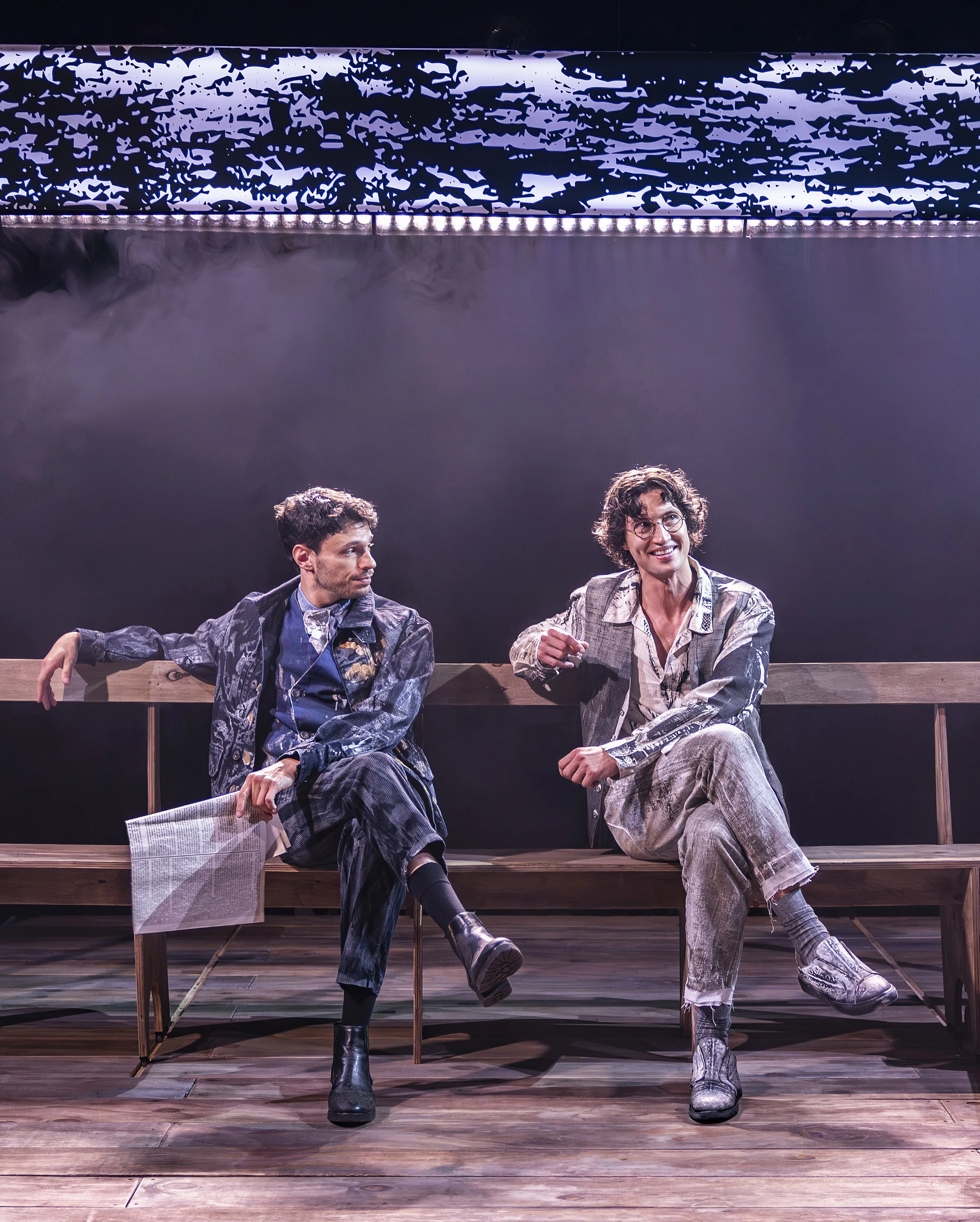
The beauty of Gage’s music is matched by the visual elements of the show. Andrew Exeter’s set design leans into the port-town setting, with a wooden crate labelled with William and Richard’s names suspended above the stage, as well as smaller crates used as props and chairs throughout the production. The audience sits on three sides of the stage, with members of the ensemble often seated on wooden benches along the fourth side, creating a feeling of being watched from all angles and mirroring the experience of people such as William and Richard, forced to hide their true selves from society’s watchful gaze. Matt Hockley’s lighting is similarly effective in adding to the atmosphere of the piece, particularly in a moment towards the end of the musical, where William and Richard are silhouetted against a bright light with drapes billowing behind them.
Overall, I would highly recommend taking the opportunity to see Redcliffe at Southwark Playhouse Borough. Beautiful, heartfelt, and important (particularly at a time when we are seeing ever-increasing discrimination against LGBTQ+ people), Redcliffe is exactly the kind of new musical theatre work that deserves to be supported.
Redcliffe runs at Southwark Playhouse Borough until 4th July 2026.


Photos by Pamela Raith