Review: John Proctor is the Villain at Royal Court Theatre
⭐⭐⭐⭐⭐ (Five Stars)
In the Royal Court Theatre’s 70th anniversary year - also marking 70 years since the first London production of Arthur Miller’s modern classic play, The Crucible, at the very same venue - John Proctor is the Villain is an inspired piece of programming, triumphantly realised. Receiving seven nominations at the 2025 Tony Awards for its acclaimed Broadway run last year, this play is one of the hottest tickets in London right now and, with the entire run at the Royal Court currently sold out, it’s not hard to see why. Through the lens of a small-town Georgia classroom, the play brilliantly captures a significant moment in recent history, delivering gut-wrenching revelations, intense catharsis, as well as plenty of laughs along the way.
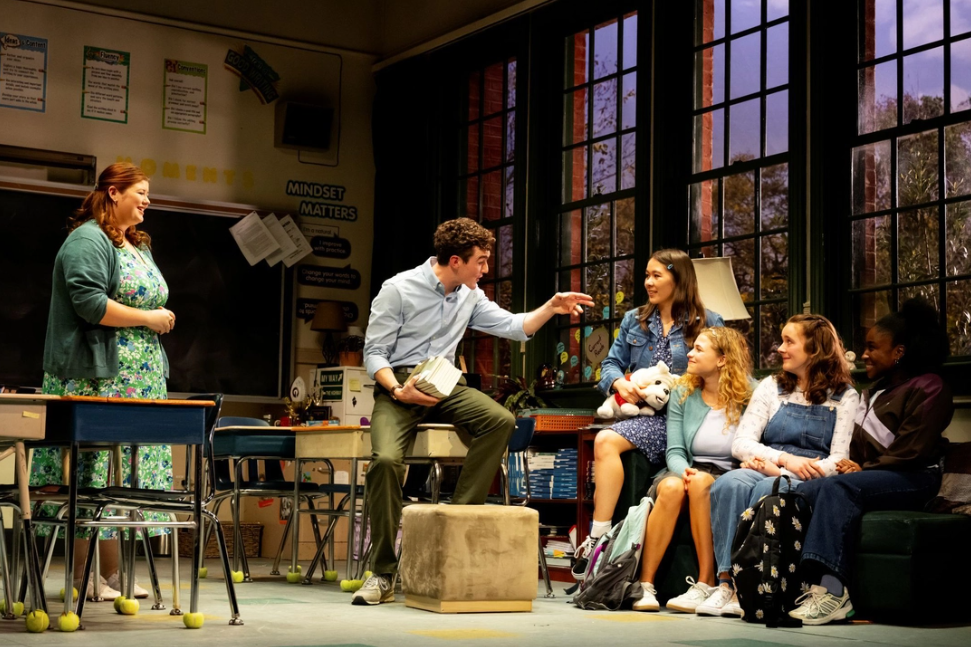
The play introduces us to a group of high school students in 2018 as they begin studying The Crucible with their teacher, Mr Smith (Dónal Finn), who enthusiastically explains how the play is an allegory for the witch-hunts of McCarthyism in the 1950s United States because “that’s what art is for, to make sense of moments in time”. However, as the class dives into the text, they find it staggeringly relevant to the Me Too movement they are living through. A group of girls in the class establish a feminism club: initially rejected by the school counsellor, Miss Gallagher (Molly McFadden), in light of current events, but encouraged by Mr Smith. What begins as hypothetical debate, including discussions around Taylor Swift and whether you can be a feminist and still “be obsessed with guys”, becomes something far more immediate when their estranged friend Shelby (Sadie Soverall) returns to school and accusations are made against men much closer to home, all while the girls navigate adolescence and their own relationships.
The entire cast, several of whom are making their professional debuts, deliver outstanding performances. Sadie Soverall as Shelby captures the character’s bravery, intelligence, and humour, as well as her vulnerability. Dónal Finn portrays the class’s charismatic and beloved teacher with endearing charm, while Holly Howden Gilchrist’s performance as overachiever Beth is a particular highlight. Some of the funniest moments in the play come when the students read from or act out parts of The Crucible, with exaggerated expressions and cadences that momentarily make you forget you’re watching actors at all. In particular, Reece Braddock as Mason, placing emphasis on the final word of each line he reads from The Crucible, is a brilliantly observed detail.
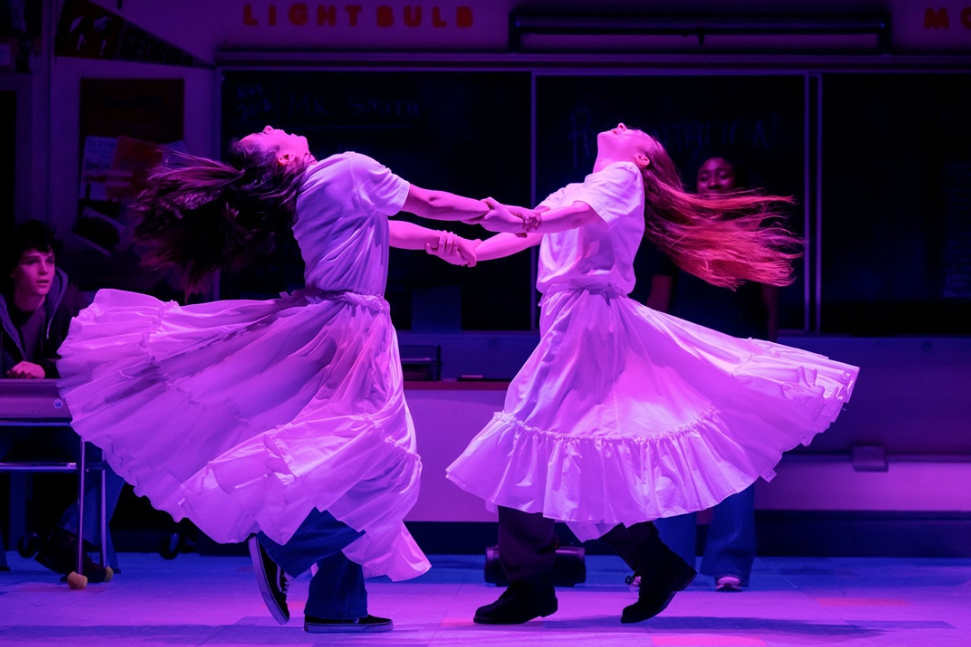
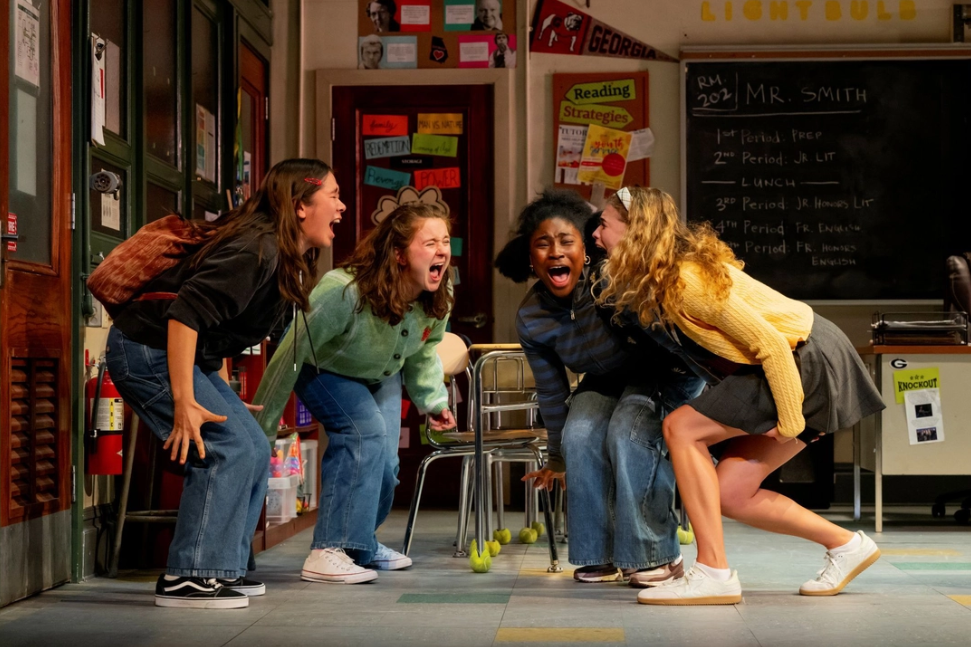
Playwright Kimberly Belflower provides John Proctor is the Villain with masterful writing. Each character feels nuanced and three-dimensional, and the dialogue rings true to the teenage voice and experience (Harry Styles and Beyoncé references included). The play vividly captures the expression of teenage rage through screaming, laughing, and dancing, with the class’ debate about why the girls in The Crucible danced naked in the woods - despite the dangers of being accused of witchcraft - leading to a brilliant and satisfyingly full-circle moment later on as dance is reclaimed by the girls in John Proctor is the Villain to express their own anger and power.
Director Danya Taymor ensures the pacing never falters throughout. The transitions between scenes are used to great effect, with focus drawn to a particular character each time, bringing their emotions to the fore before we enter the next scene. One notable exception to this comes at a pivotal moment, however, where a complete blackout follows a gasp-inducing reveal, allowing the audience a brief but powerful pause to absorb the new information.
The vast majority of the play takes place within Mr Smith’s classroom, and the set design by AMP, featuring Teresa L. Williams, captures this setting with impressive authenticity. Tennis-ball-footed desks are arranged in various configurations, within a realistic classroom complete with motivational displays and a chalkboard. One side of the room features a wall of windows looking out onto trees beyond, and Natasha Katz’s lighting design beautifully filters light through them, casting shadows across the space and indicating the time of day. Katz’ lighting is also crucial to the power of the final moments, where the classroom’s fluorescent overhead lights give way to vibrant colours that reflect the intense emotion being depicted on stage.
Music plays an integral role in John Proctor is the Villain, with references to the biggest pop stars of 2018 and Lorde’s song “Green Light” carrying particular significance. In addition, original compositions from sound designer Palmer Hefferan, combined with Hannah Wasileski’s projection design - which animates the classroom posters and displays - allow the production to transition between scenes without losing momentum.
Overall, John Proctor is the Villain is an outstanding piece of theatre: it’s intelligent, thought-provoking, and deeply powerful. While the current run at the Royal Court may be sold out, this production deserves a further life - both in London and beyond - so that more audiences, particularly young adults, have the opportunity to experience it.
John Proctor is the Villain runs at Royal Court Theatre until 25th April 2026.
John Proctor is the Villain’s West End transfer runs at Wyndham’s Theatre from 2nd February 2027 - 24th April 2027.

Photos by Camilla Greenwell